I’m not a Labour supporter and I didn’t vote for Labour in the last election. In fact I’ve never voted for labour. I’d like to clarify that before you read on.
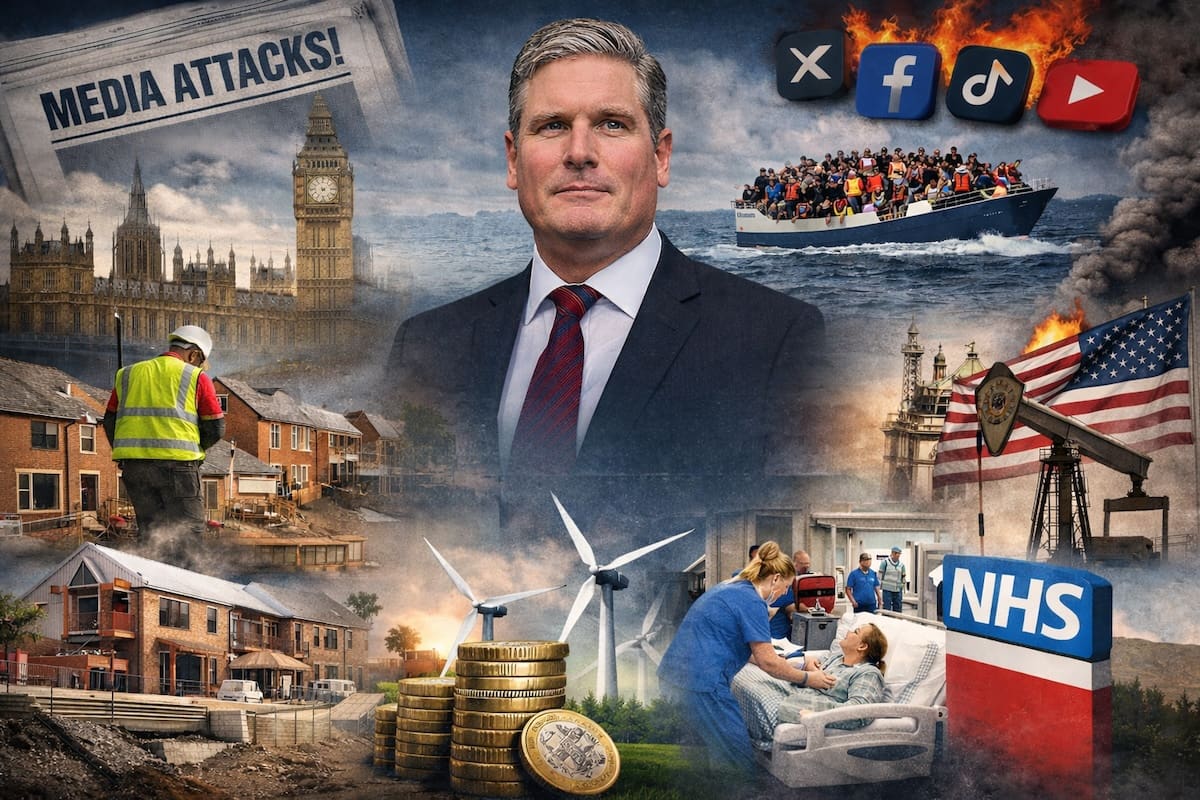
However, unless you have your head firmly buried in the sand, or you’re stuck in the ultimate online echo chamber, it is hard to dispute the fact that the party has been governing in the most hostile media environment any UK government has faced in history.


It’s no secret that most of the UK media is now owned by a handful of foreign billionaires, consistently pushing their personal agendas. Couple that with the fact that US social media firms have lurched to the extreme right of politics, consistently promoting ‘rage bait’ and conspiracy theories to ever increase their engagement.
This means it’s difficult to objectively assess the true performance of the current UK Government, particularly in comparison to previous Governments who were treated relatively kindly by the UK press for obvious reasons.
So, to avoid being yet another one of the social media sheep, I decided to take a deep dive into what Labour have actually been doing for the past 18 months, and I admit, I came away with a slightly different opinion – and it wasn’t the one I was expecting.
Rage Bait
First off, before we go into what Labour has been doing for eighteen months, it’s worth considering what is behind the media (and social media) hostility. If social media is anything to go by, you’d be forgiven for thinking that the UK is a failed state, London is a lawless Sharia Law controlled ghetto, and free speech has been replaced with North Korea style clampdowns.
Of course, none of this is true, but the flow of disinformation and so-called rage bait pouring into the UK, normally from overseas based bots and ‘content creators’ is unprecedented. In fact, recent analysis showed that bots account for upwards of 20% of social media comments, typically pushing and amplifying right-wing content. Some estimate this is far higher. Human-like bots are becoming more sophisticated and are very good at driving engagement, so chances are that ‘person’ who triggered your rage on social media, isn’t a person at all. The result is the UK population living in a parallel reality between actual life, and perceived life.
In 2026, it’s almost impossible for any of us to remain impartial, given the sheer bombardment of negative ‘rage bait’ we receive on a daily basis, and evidence shows that this hostile media landscape is not only growing, but is being deployed a foreign policy by other countries, including our ‘ally’ the USA.
All of us should already know that the UK media is predominantly owned by a handful of offshore billionaires or tax exiles. This includes the likes of the Daily Mail, The Sun, Sky, GB News, The Express, and the Telegraph.
The influence of those media outlets on the British consciousness has always been strong – especially when they all lean to the right for reasons we can only assume come down to money and power – but their influence now pales into insignificance when compared to the impact of social media companies.
The tech billionaires (or trillionaires) not only appear to be profiting from creating division and anger online, but research shows that the algorithms have changed significantly and appear to be heading in a very dark and divisive direction.
It is becoming increasingly apparent that social media has become the perfect divide and conquer weapon for any foreign powers seeking to undermine, destabilize, and fracture rival powers. Incumbent politicians all over Europe can attest to this phenomenon.
That online hostility (unhelped by Labour’s absolutely woeful media comms), has helped shape a negative narrative around the government from day one, even before any major policy had even been rolled out.
Given the unprecedented media (and social media) bombardment, you’re not to blame if you view Labour in an extremely negative light.
Hostility
Firstly, it’s important to understand why the media is so hostile to Labour. Several factors explain why Labour is on the hard end of a continual media barrage.
1. Legacy press interests
Many large newspapers have historically backed right-leaning parties, not necessarily out of ideology alone but because Conservative governments have tended to be more aligned with their ownership structures and business priorities. A Labour government positioned to regulate powerful industries — tech, energy, housing, utilities, finance — naturally encounters resistance.
2. US social media algorithms
Platforms such as Meta, X, TikTok and YouTube overwhelmingly reward anger, conflict and simplicity over nuance. Sensational anti-government content spreads faster than policy detail. These companies also have strong incentives to avoid regulation; any party proposing tighter controls on misinformation, data use or platform power becomes an immediate target for hyper-amplified criticism.
Take Elon Musk’s ‘free speech’ crusade. This has little to do with UK laws around free speech (which are broadly more liberal than other Western countries, including the USA), and everything to do with Elon Musk seeking to retain power. Any rules and regulations to prevent our children from seeing harmful content, or to prevent the distribution of false information or foreign propaganda, will ultimately hurt Elon Musk’s power and pockets. He doesn’t want that.
Don’t mistake Musk’s interest in free speech as anything other than an agenda for protecting his assets. Luckily for him, Elon has a growing number of useful idiots marching through the streets demanding free speech in the UK, despite what is happening around free speech in the US. This is surprising when there has perhaps been a handful of legal cases in history, where one might consider free speech to have been in question, even when that comes in the form of inciting violence.
3. Fragmented public trust
Years of political chaos, Brexit, culture wars and online echo chambers have created an audience predisposed to scepticism. This means any government faces distrust, but an incoming Labour administration, promising structural change, is especially vulnerable to suspicion and misinformation.
Put together, Labour inherited not only a challenging economic and social landscape, but a communication environment where its messages could be drowned out before they even reach the public. You’ve heard of the term ‘flood the zone’.
4. US Foreign Policy
Did you know that the EU has roughly the same GDP as the USA? It’s no wonder that the USA and Russia share something in common – a divided and less powerful Europe is good for both of them.
Recent reporting and analysis of the current US administration’s foreign policy indicate a significant shift in stance, explicitly promoting the rise of the far-right in Europe (yes, they have just published this in black and white):
- Explicit Ideological Alignment: The administration’s National Security Strategy (NSS) aims for the “political-cultural alignment of transatlantic right-wing forces,” viewing the European Union’s integration model and liberal democracy as fundamentally at odds with U.S. priorities.
- Weakening the EU: A key strategic objective is the structural weakening and fragmentation of EU institutions to reduce Brussels’ regulatory power over American tech firms and other areas.
- Direct Support for Far-Right Parties: The strategy provides a framework for “political and ideological interventionism in Europe,” which could involve U.S. State Department funding being geared towards promoting far-right parties.
With this bombshell in mind, it’s obvious that and party in the centre or to the left of politics is going to face increased pressure and interference from the USA, Russia, and other powerful governments.
What Labour Has Actually Done, Beyond the Headlines
Criticism is essential in a democracy – but it has to be grounded in reality. Away from the conspiracy theories and rage bait proliferated and enabled by the US tech bros, Labour has actually taken steps across several major policy areas that are worth acknowledging, whether or not you support them.
1. Immigration: fewer headlines, bigger shifts
Despite the daily focus on small boats in the Daily Mail/Express, and on GB News, Labour is on course to significantly reduce net migration. If forecasts are correct, we could see the largest and fastest fall in net migration on record.
This was one of Sir Kier Starmer’s key pledges in an attempt to win back red wall voters from Reform.
It’s not a policy that is popular with all Labour supporters, but nobody can deny that high migration is something the general public is wary of – and it has been Nigel Farage’s meal ticked for a long time.
Changes to visa salary thresholds, tighter rules on dependants, stricter enforcement, and a more restrictive approach to labour shortages are already narrowing legal entry routes. As these routes close, small-boat crossings are likely to increase in the short term – not because policy has failed, but because irregular migration typically rises when formal access becomes harder.
This creates a politically uncomfortable paradox: net migration falling while the most visible form of migration increases.
It is a dynamic that has existed for decades but is rarely explained honestly. It is also easily exploited in headlines, even though it reflects long-term migration patterns rather than a collapse in border control.
The question is, where will Reform go when the migration statistics are released? My guess is they will double down on ‘small boats’.
2. An economic shift focused on investment and stability
Labour inherited sluggish growth, historically high public debt, and public services hollowed out by more than a decade of strain. Its early budgets and spending reviews have focused on:
- Prioritising long-term investment in infrastructure, schools and energy security
- Increasing the minimum wage above inflation
- Offering clearer, more predictable signals to business after years of abrupt policy reversals
Supporters argue this is overdue modernisation; critics say it is too cautious given the scale of the challenge. Either way, it represents a clear move away from short-term, headline-driven economics.
However, it hasn’t been plain sailing. Labour has been blighted by various policy U-turns, bad communication, and departmental power struggles. Some of the hardest fiscal decisions have impacted businesses too, which some expect will have a negative impact on growth.
However, with a debt black hole to attend with in mind, if Labour can keep their messaging clear and consistent, they may eventually win businesses over by offering stability and consistency.
3. Energy reform – despite pressure from the US
The creation of Great British Energy, a publicly owned clean energy company, marked a significant structural shift in energy policy. Its aim is to reduce reliance on volatile global fossil-fuel markets while accelerating renewable power generation at home.
This strategy has already faced international resistance. The world’s largest oil-producing country – now led again by a strongly pro-fossil fuel US administration under Donald Trump – has sought to undermine Britain’s attempt to reduce dependency on fossil fuels.
You only need to open a tabloid newspaper to see consistent attacks on renewable energy, particularly the UK’s most reliable source, wind. However, almost all of the information is misleading at best, and completely false in other cases.
Whether one favours state-led or market-led approaches, this is not a cosmetic policy change. It is a long-term bet on energy independence – and one that will take time to judge properly. Either way, it’s difficult to argue that energy independence is not a positive step given the volatility of geopolitics in 2026.
4. Early attempts to stabilise the NHS
The NHS is under extraordinary pressure, and no government could realistically fix it quickly. Labour has nevertheless:
- Directed additional funding towards frontline services and technology
- Begun reforms aimed at improving GP access
- Set clearer recruitment and waiting-time targets, with public reporting
Progress is slow – inevitably so – but early data suggests waiting times are falling relatively quickly, and investment is increasing. The emphasis so far has been on rebuilding capacity rather than chasing short-term wins.
The NHS will always be at the mercy of episodes such as the winter flu epidemic, but long term investment is finally happening, undoing a decade of ideological underinvestment.
5. Support for households and workers — with trade-offs
The government has continued and expanded targeted support for vulnerable households and working parents. Alongside this:
- Lifting the two child benefit cap – which is predicted to lift around 450,000 children out of poverty by 2030
- Armed forces personnel received one of their largest pay rises in years
- Employment protections have been strengthened, including fair work standards and parental leave rights
Labour came under heavy criticism for removing Winter Fuel Payments from many pensioners – a decision defended on fiscal grounds but politically costly. It underlines a recurring theme of this government: redistributive choices that create visible losers as well as winners.
Despite the outcry from the press, it’s obvious that those who can afford it, should not be receiving free money from the Government (especially when there are working families who cannot afford to heat their homes). However, this one gets chalked off as another case where Labour failed to control the narrative.
6. Addressing long-standing structural issues
Labour has also taken steps – some symbolic, some practical – toward:
- Tackling child poverty through cross-departmental coordination
- Confronting politically difficult legacy foreign-policy issues, including negotiations with Mauritius over the Chagos Islands
- Modernising planning, housing and infrastructure rules to accelerate home-building
These are slow-burn problems no government resolves in a single term. What Labour has done is move them from the margins back to the centre of policy.
Why this won’t end the criticism
Even with these actions, Labour will continue to face intense scrutiny – some fair, some performative – because:
- The UK media market rewards controversy more than competence
- Social media platforms amplify emotionally charged anti-government narratives
- Structural problems (NHS backlogs, housing shortages, inflation legacy) take years to shift
- Expectations were high, and patience is short
- The US has announced that part of its foreign policy is to promote right wing governments across Europe.
In short: even when things improve, what goes wrong will almost always be louder.
If you’re sick of Labour… this will probably still annoy you
You may think Labour is too cautious, too interventionist, too technocratic – all legitimate arguments. But it is worth distinguishing genuine critique from narrative distortion shaped by a hostile media environment.
Strip away the headlines and the record is neither triumph nor disaster. It is the early work of a government attempting to rebuild long-neglected systems, while operating in an information ecosystem designed to make every decision look catastrophic.