
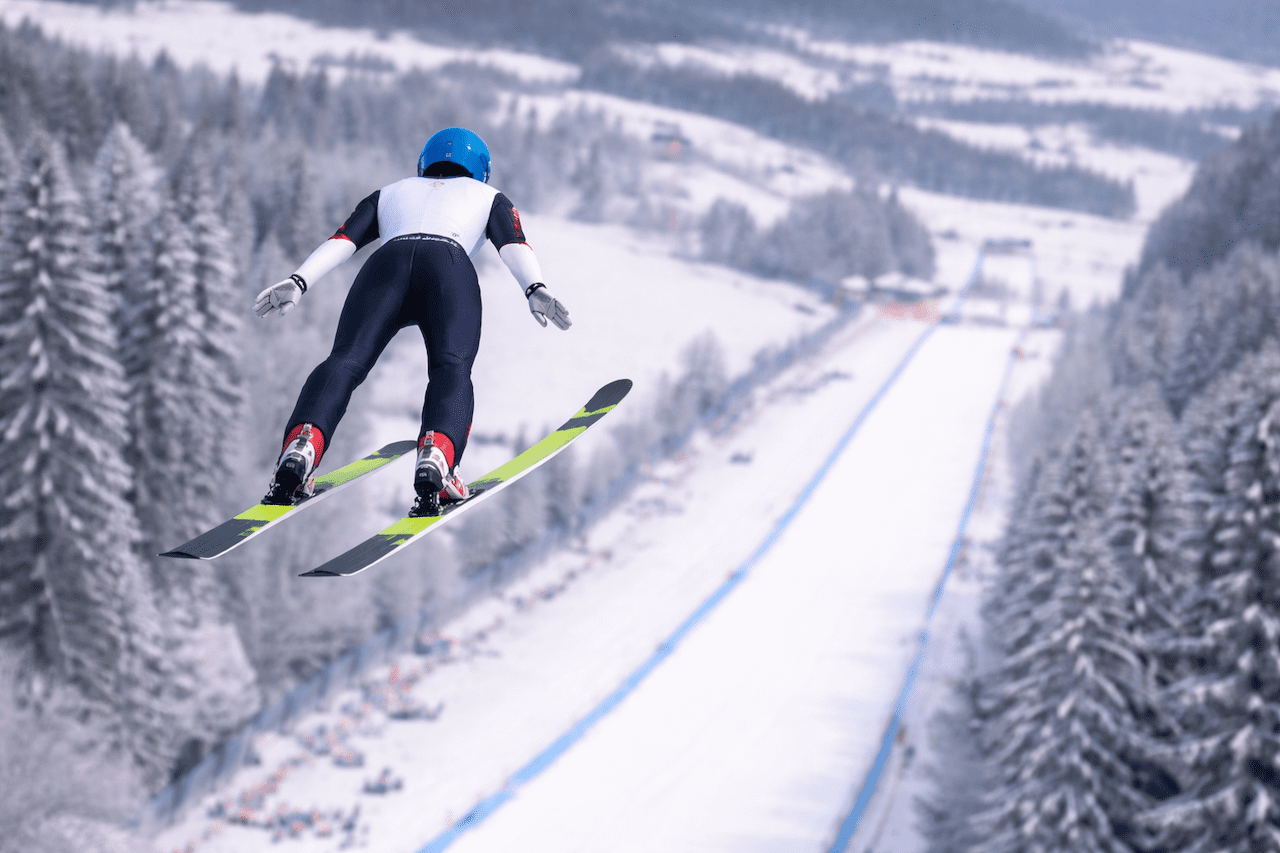
The World Anti-Doping Agency (WADA) has said it could examine allegations that male ski jumpers are injecting their penises with hyaluronic acid in an attempt to gain a competitive edge if credible evidence emerges.
The unusual claim first surfaced in January via German newspaper Bild, which reported that some athletes may be using the cosmetic filler before official suit measurements are taken.


Hyaluronic acid, a substance not currently banned in sport is commonly used in aesthetic procedures and can increase circumference by up to two centimetres. In ski jumping, even marginal changes in body measurements can affect the permitted dimensions of an athlete’s suit and potentially increase the surface area available during flight.
According to the International Ski and Snowboard Federation (FIS), suit surface area directly affects aerodynamic lift. As FIS men’s race director Sandro Pertile has previously put it: “Every extra centimetre on a suit counts. If your suit has a 5% bigger surface area, you fly further.”
Asked about the reports during a press conference at the Milan–Cortina Winter Olympics, WADA director general Olivier Niggli said the agency had not yet reviewed the specifics but did not rule out action.
“I am not aware of the details of ski jumping and how that could improve performance,” Niggli said. “If anything was to come to the surface, we would look at it and see if it is doping related. We don’t address other [non-doping] means of enhancing performance.”
WADA president Witold Bańka, appearing amused by the suggestion, added: “Ski jumping is very popular in Poland so I promise you I’m going to look at it.”
FIS has pushed back firmly on the story. Communications director Bruno Sassi said there is no evidence to support the claims.
“There has never been any indication, let alone evidence, that any competitor has ever made use of a hyaluronic acid injection to attempt to gain a competitive advantage,” he told BBC Sport.
Ski jumpers undergo strict pre-season measurement checks using 3D body scanners while wearing only tight-fitting underwear. Regulations allow suit tolerances of just 2–4cm, with crotch height a key measurement which is tightly controlled. For male competitors, suits may extend only 3cm beyond the athlete’s measured crotch height.
Any physical alteration affecting those measurements could, in theory, influence suit approval.
The sport has already faced scrutiny over equipment manipulation. Last year, Norwegian Olympic medallists Marius Lindvik and Johann Andre Forfang accepted three-month suspensions linked to tampered suits at the World Ski Championships in Trondheim. FIS concluded their team had “tried to cheat the system” using reinforced thread, though the athletes themselves were later cleared of direct involvement.
Both are due to compete at the Winter Olympics, which begin this week.
For now, the alleged injections remain unproven, but they’ve certainly added an unexpected twist to ski jumping’s ongoing battle over marginal gains.