
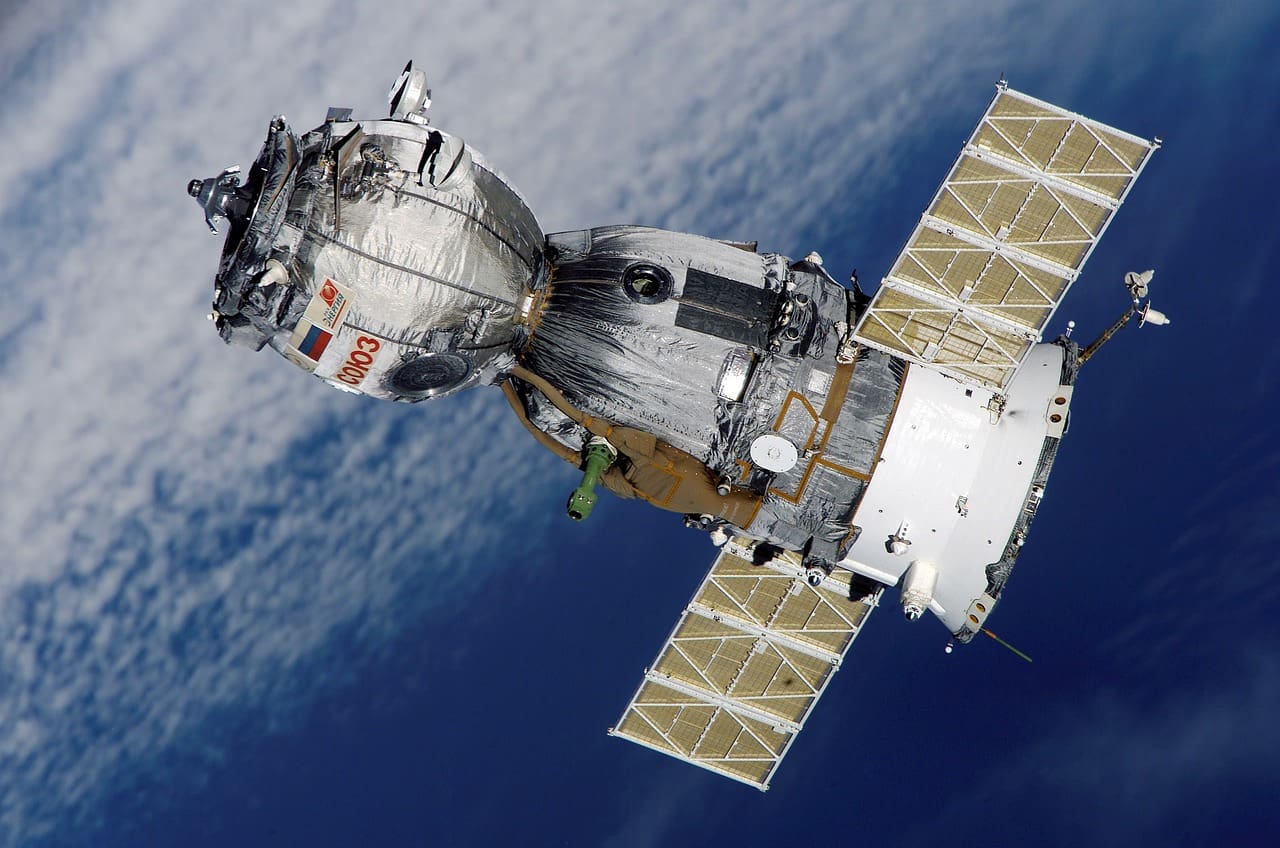
Radio amateurs on an Oslo rooftop told a European Space Agency satellite to play Doom on Monday 27 July, and it obeyed.
Tanagra Space, which supplied the software, calls it the first time a satellite has been commanded by plain spoken language and acted on it by itself. Gizmodo reported it as the first known case, and the claim is the organisers’ own assessment rather than an independently verified record.


The story has only surfaced in the past week. It also needs a small correction to the way some coverage frames it.
Not quite the same satellite
Vice reported that the satellite had done it “again” a year after an Icelandic developer’s feat. In fact there are two spacecraft. Ólafur Waage and ESA engineer Georges Labrèche ran Doom on OPS-SAT-1 in late December 2023, as PC Gamer noted at the time.
The world noticed again last October, when Waage gave a talk at the Ubuntu Summit, The Register reported. The July stunt used a different craft, OPS-SAT PRETTY, a cubesat launched in 2023.
According to Space.com, Jon Bergli Heier spoke the command at night from the rooftop. PRETTY transcribed it on board, launched Doom and sent back a “postcard” with a gameplay frame, the transcript and signal diagnostics.
Tanagra Space says it worked twice that day: first with a synthesised voice loop, then with a live human voice.
Can it run Doom?
The question is an internet institution. The phrase is applied to any device that is not a games console or PC, such as a treadmill, a calculator or a pregnancy test, according to Wikipedia’s entry on the meme. It is helped by the game’s source code, released in 1997 and put under an open licence in 1999.
The pregnancy test is the classic. The programmer Foone Turing got there by swapping out the screen and processor, as Windows Central noted. GameSpot reported the result was playable on a 128×32 monochrome display, with a mini keyboard for controls.
This year the game moved into biology. Wikipedia records that Australian company Cortical Labs showed about 200,000 human brain cells controlling a copyright-free version called Freedoom.
Then came orbit. OPS-SAT-1 was built for this sort of thing. ESA describes it as a flying laboratory, designed to stay safe even if experiments go wrong, and more than 100 companies and institutions from 17 countries registered proposals to fly on it.
Hacking a machine you cannot touch
The word “hack” sounds alarming here, but Futurism noted that nothing about it was malicious. The satellite was meant to be experimented on.
The problems were still real. OPS-SAT-1 has no graphics card and no screen. Waage said in the video that even with a screen, “it would take a pretty good telescope to see what was going on”.
The fix was to use the satellite’s camera. The team took photos of Earth and swapped them in as the game’s sky in place of the Martian one, according to TechSpot. Doom’s 256-colour palette made the blend awkward.
The idea was not new for Labrèche. His project notes on GitHub trace the ambition back to 2011, when he found a webcomic that stuck with him. He joined the OPS-SAT mission control team in 2020, then pushed for the stunt as the spacecraft’s planned 2024 re-entry loomed. He is now the founder of Tanagra Space.
The voice version was a scrappier affair. Space.com reported that the Norwegian club spent 59 days and about 7,200 NOK (roughly $775, pizza included) on the effort. According to a summary of the Space.com report, six earlier attempts between April and July failed. The satellite’s receiver channel proved too wide for voice and had to be narrowed.
There is a serious point under the joke. David Evans, head of ESA’s OPS-SAT Space Lab, was reported as saying that recognising a human voice in orbit matters because space links normally carry strictly binary data. Tanagra Space says a satellite that understands speech could one day hear a mayday call from someone in distress at sea or in a remote area.
The caveats are real, too. Gadget Review noted that PRETTY matched degraded speech against a narrow set of trigger phrases. It is not open-ended language understanding.
Eskil Hadland, the club’s representative, put the achievement more simply: “Our tiny ground station shouted at an ESA spacecraft, and was heard.”
Sources: Vice, Space.com, Gizmodo, The Register, PC Gamer, TechSpot, Futurism, GameSpot, Gadget Review, ESA ESOC
This story was compiled by the MDW Newsdesk with AI-assisted tools, using the reporting credited above.