
‘Yotzin’: how an Ice Age man turned up under a Mexican airport
A skeleton first mistaken for a camel has been dated to the end of the last Ice Age. It does not rewrite when people reached the Americas, but it gives researchers a rare, well-dated individual to test the story against.

· 2 min read
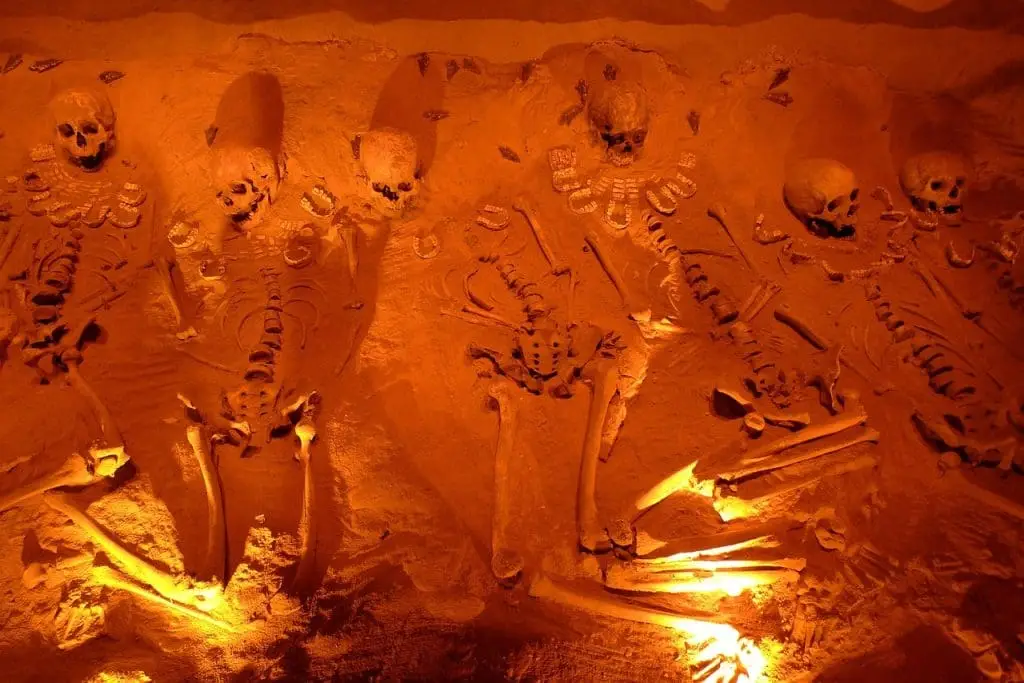
A near-complete human skeleton unearthed in 2021 during construction of Felipe Ángeles International Airport, north of Mexico City, has been dated to between 11,700 and 13,087 years ago.
Mexico’s National Institute of Anthropology and History (INAH) announced the result on Friday 20 November, according to La Nigua. It places the man, nicknamed Yotzin, among the 23 oldest human skeletons known from the Basin of Mexico.
From suspected camel to Ice Age man
Archaeologist Israel Peña found the bones on the north-west side of the airport site in Santa Lucía, State of Mexico, La Brújula Verde reported. He first took the dark, heavy bones for those of a camel.
That was a fair guess. Vice reported that the airport sits on a dried lakebed full of mammoth, camel and horse fossils. The staining comes from swamp sediment of the former Lake Xaltocan, Ancient Content said.
The excavators had actually found a man aged 25 to 30, about 1.75 metres (roughly 5ft 9in) tall. About 80 per cent of his skeleton survives, including part of the skull, SSBCrack News reported.
He was the only human burial in his 25 by 30 metre excavation area. INAH did the work as salvage archaeology, digging ahead of the builders.
Two labs, two windows
The dating is where it gets interesting. A Belgian laboratory that INAH has not named analysed collagen and gave 13,087 to 12,987 years before present. A US lab testing tooth mineral gave 12,050 to 11,700 years, according to Vice.
The two windows do not overlap. The gap between them is about 937 years. INAH has not said which it prefers, La Brújula Verde noted. Both fall around the shift from the Pleistocene to the Holocene, the end of the last Ice Age.
When INAH first announced the skeleton in June 2024, Mexico News Daily reported that no radiocarbon date existed. Researchers then guessed about 10,000 years from the bones’ features. INAH biologist Lauro González Quintero said the soil layer pointed to something older, and the lab results bear that out.
What it does and does not change
Yotzin does not move the date of first arrival. In 2021, footprints at White Sands National Park in New Mexico were dated to between 21,000 and 23,000 years ago. A 2023 study in Science used independent methods and reaffirmed that range. The prints are roughly 8,000 years older than Yotzin, even on the oldest of his dates.
What he offers is a body rather than a trace. Anthropologist Arturo Talavera González studied him and said his features differ from the other three skeleton groups recovered at the airport, hence the Nahuatl name meaning “unique”. The teeth are heavily worn but free of cavities. INAH researchers say this fits a hunter-gatherer diet from before pottery, with roots and hard bark.
His long skull resembles those of early people from northern Mexico and Baja California Sur, Vice said. Skull shape and ancestry do not always line up.
That is why the DNA matters. Analysis at Spain’s University of Burgos could produce results in the first three months of 2027, La Nigua reported. Talavera believes the lineage could show how people moved through the Americas.
Until then, the date gap stays open. The genome may help settle which end of the range is closer to the truth.
Sources: VICE, La Nigua, La Brújula Verde, Mexico News Daily, Science, Ancient Content, SSBCrack News