
Why 200 years of ‘answered’ prayers for rain in Murcia weren’t a miracle
A Spanish cathedral's records show rain was 71% more likely after it prayed for it. The researchers behind the study say the cause was the local climate and the church's timing, not divine intervention.

· 2 min read
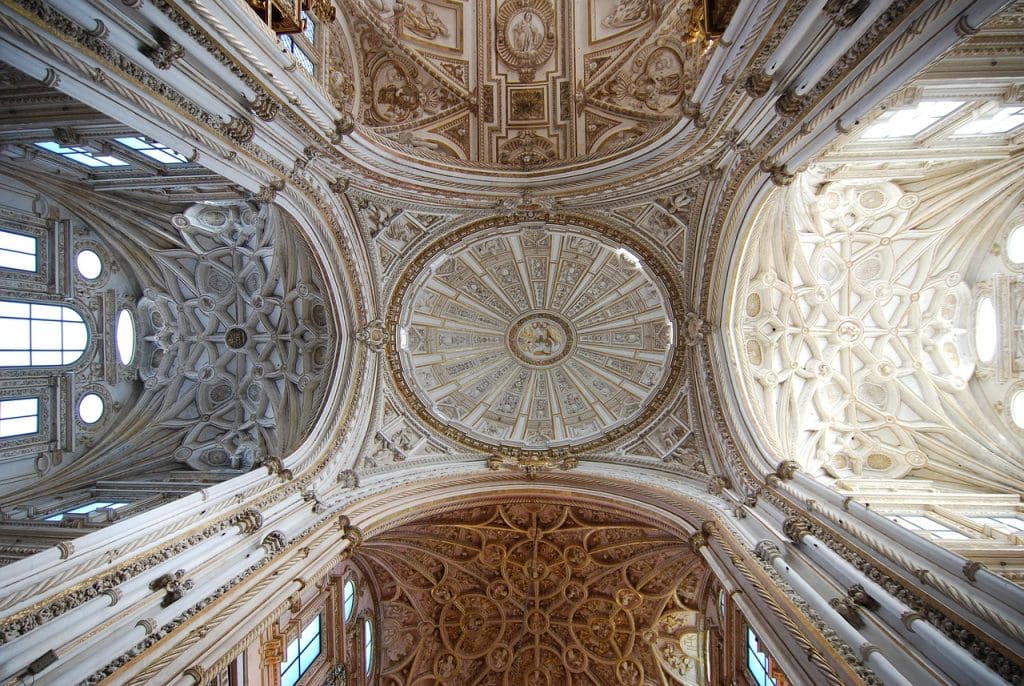
Rain was 71% more likely to fall in Murcia, south-east Spain, in the month after church prayers for it between 1600 and 1836, a study has found.
The finding comes from economists at Yale and the University of Murcia. Vice reported on the work this week. The paper, by José-Antonio Espín-Sánchez, Salvador Gil-Guirado and Nicholas Ryan, appears in the August 2026 issue of The Quarterly Journal of Economics, according to Yale’s Economic Growth Center.
Their conclusion is not that prayer works. They argue the clergy had stumbled on a ritual that looked as if it worked.
The weather was already turning
The 71% sounds dramatic until you see the base figure. On an ordinary day in Murcia, the chance of significant rain was about 0.2%. After a prayer it rose to about 0.35%, still well under one chance in 200.
The key is how Murcia’s weather behaves. After a downpour, the odds of another fall for around two months. But the longer the dry spell lasts, the likelier rain becomes again.
The church tended to act late. Prayers, often with processions and sacred relics, began once a drought had become painful. By then, the weather was already drifting back towards rain.
The authors’ model makes this explicit. In their abstract, they say prayer can persuade only where the chance of rain rises during a dry spell, so it is “most likely to succeed when people most want rain”.
Persistence helped too. The paper in the journal says the prayers escalated, continuing until rain fell and the church declared success. A ritual that only stops when it succeeds will always have a good record.
The prayers were no recent fad. The paper says the church in Murcia had been holding rain rogations since at least the fourteenth century. The study draws on 1600 to 1836, using the cathedral chapter’s minutes.
Checking the church’s own books
Church minutes are not a neutral record, so the team cross-checked them. They used rainfall reports kept separately by the town council, and the pattern held.
They also found a natural test. According to Vice’s account, the church lost its power to raise taxes in 1837 and organised far fewer prayers afterwards. The rain carried on falling at the same rate.
Murcia was not a one-off. The researchers compiled data on 1,208 ethnic groups worldwide. Groups living where rain grows likelier as a drought drags on were 47% more likely to have rain rituals.
That suggests many societies, independently, kept the practices that appeared to deliver.
There is a social angle as well. The same researchers have studied how Murcia’s church and city authorities used rain rituals to shore up their standing. A leader who seems able to end a drought is more likely to be heard on other matters.
The study does not claim to know what individual clergy privately believed. Nor does it rule on whether prayer has any power. Its claim is narrower: for centuries, in a dry corner of Spain, the evidence for rain prayer seemed to fall from the sky.
The full paper is free to read on the Oxford Academic site.
Sources: Vice, Yale Economic Growth Center, The Quarterly Journal of Economics (Oxford Academic)